

Can AI make a recipe?
My experiment with Google's new AI foodie tool.

Last week, I cooked a curry recipe entirely generated by AI.
Depending on who you ask, AI is either the dawn of a dazzling new era or the beginning of our robot‑overlord downfall. But while everyone else is debating job markets and ethics, my food‑obsessed brain wandered somewhere completely different. With all this hype, I couldn’t help wondering: can AI actually make a recipe worth cooking?
That curiosity sent me down a surprisingly entertaining rabbit hole, and today I’m bringing you along for the ride. We’re going to test whether artificial intelligence can hold its own in the kitchen - or at least on paper. It’s a fun experiment, and the results might surprise you, so stick around.
I’m Jack Faulkner, and every week I share a different story and recipe from the world of food. Five years ago, during the pandemic, and after a lifetime of denial, I finally became vegetarian. But only two years later, I gave it up. Remnants of that period have mostly been lost to time, but one has stuck - my love of cooking.
Discovering Food Mood
You might be wondering how all of this came about.
When I got bored on my PC last week, I went down a rabbit hole into Google Arts and Culture, and I accidentally stumbled across an ‘experiment’ known as Food Mood.
The premise is simple, really - you choose the type of meal, the serving size, and then two countries’ (including some territories like Puerto Rico) cuisines from which to inspire the dish. It then generates a fully-fledged recipe, including a questionable image, in under ten seconds. This, of course, uses AI.
After messing around with it a bit and cooking up some delicious North Korea X Greenland delights, I was stuck with a serious question: would these recipes actually be any good to cook?
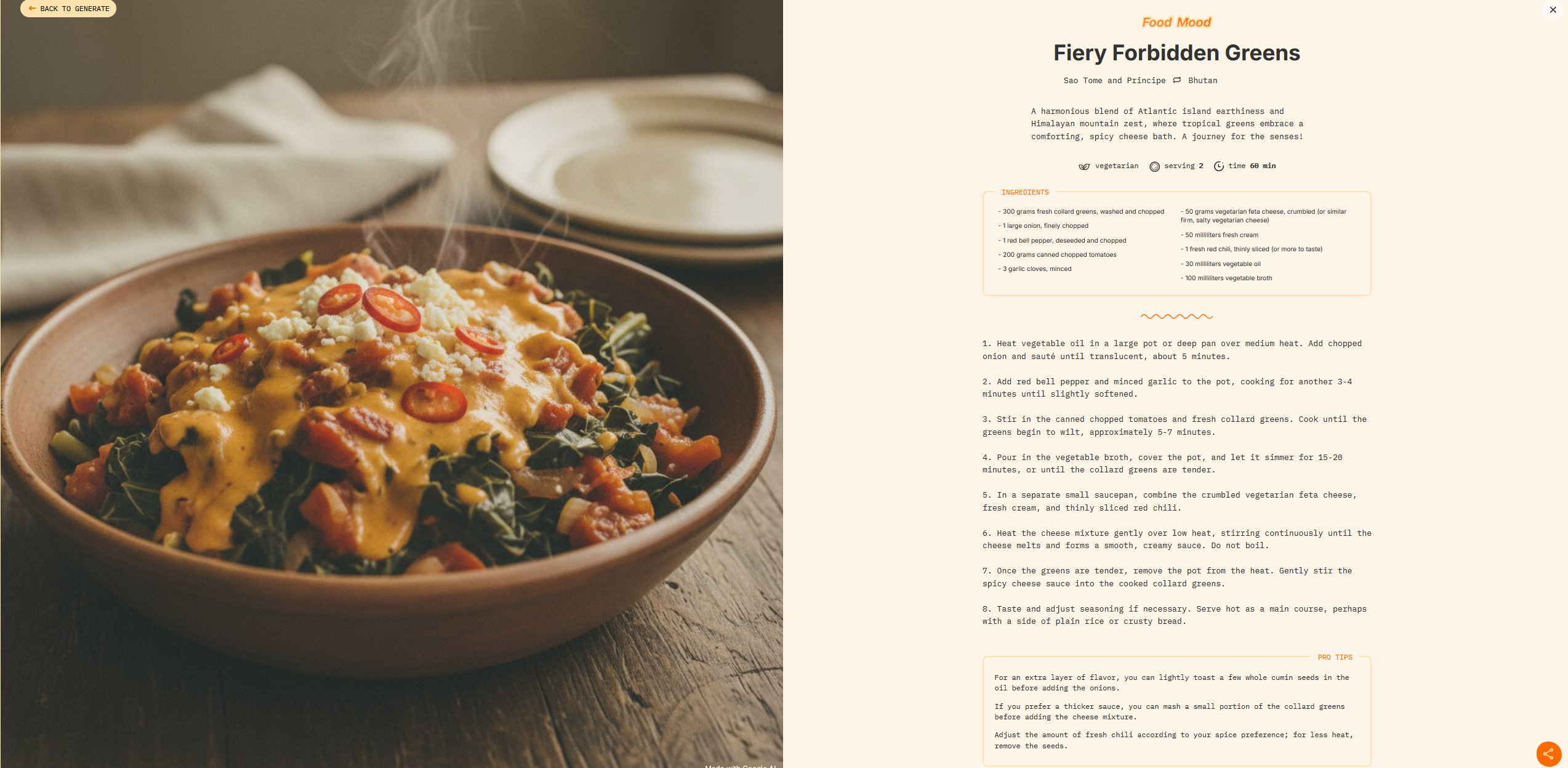
The recipe
After messing around with countries and styles, this is the recipe it came up with. It looked promising initially. It described a curry of sorts, with the typical chillies and cheese of Bhutan and the greens and spices of São Tomé and Príncipe.
However, I was also reminded of the pitfalls of AI. The picture looked nothing like the recipe it was describing, seemingly inventing a chilli garnish and forgetting that the collard greens and tomato formed part of the sauce. The recipe was also questionable, as it called for a cheese sauce made of feta, despite the fact that feta will not melt in a cheese sauce.
But hold on… did you say Bhutan? And São Tomé and Príncipe?
Yes. Why? Well, name a famous dish from either of those countries. Exactly.
That’s not a good thing. I figured that even though AI may not be able to generate a picture of a curry, it might be able to bring some attention to the world’s most underrepresented cuisines.

Dragon kings and plug volcanoes
Looking into each country’s cuisine turned out to be fascinating. Bhutan, which is a remote Asian nation in the Himalayas, has an unsurprisingly distinctive and interesting culture. Their famous dish is called ema datshi, and it’s essentially whole chillies cooked in a spicy cheese sauce. That sounds absolutely crazy, and it’s not surprising coming from a country whose ruler is literally called the ‘Dragon King’ in the Dzongkha language. I could go on and on about how cool their culture is, but suffice to say I know where my next holiday destination will be.
São Tomé and Príncipe is an equally remote island nation off the west coast of Africa. It’s a small place, and it’s known to have an awe-inspiring landscape and wonderful people. Their famous dish is called calulu, and it’s a warming stew made with fish or meat cooked with spices and okra. While they sadly don’t have a Dragon King, there is a really cool plug volcano right in the middle of one of the islands.
With the backstory out of the way, it’s time to get on with the cooking. So will it actually work?
The cooking
Well, the first problem that I encountered was that the recipe called for something called ‘forbidden rice’. I have no idea what that means, so I had to stick it out with regular, legal rice. (If there are any Bhutanese/São Tomean people reading, please enlighten me in the comments.)
With that out of the way, I got on with the cooking. It was an interesting, if a little unusual, curry. Ignoring the severe burn risk warning on the packet of chillis, I cooked the vegetables and spices and then added some coconut milk and tomato.
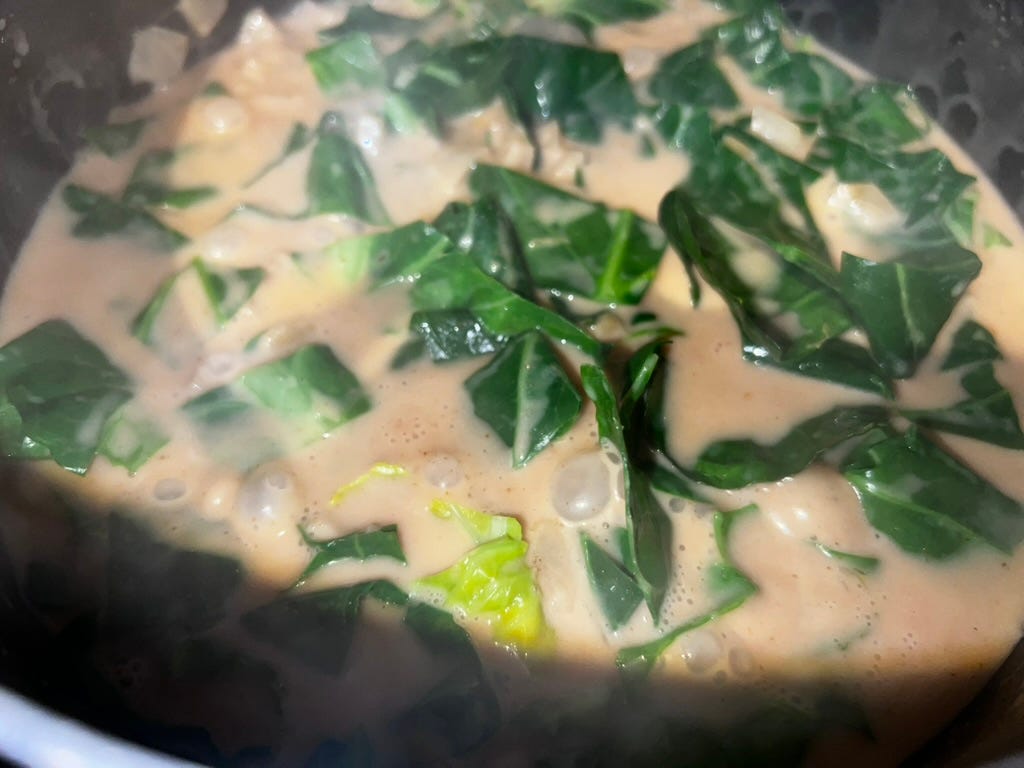
It was turning out surprisingly well so far, so I added the feta and lightly blitzed it.
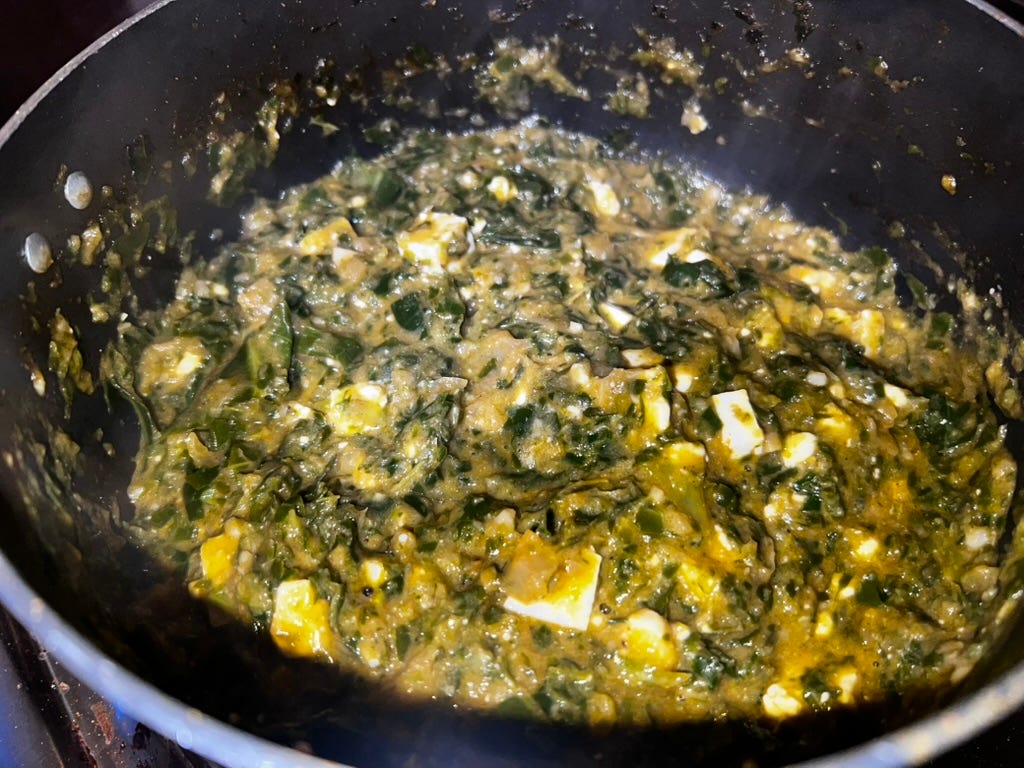
The verdict
And that was it. My AI-generated recipe for Bhutanese/São Tomean curry was finally ready.
And the verdict? Surprisingly, it turned out well. The warming West African spices really elevated the Bhutanese base, and the feta was creamy and tangy and worked really well in the curry. And, for some reason, despite adding enough chillies for me to start sweating at the thought of eating it, it wasn’t too hot at all.
Although it was a bit strange, I went from having to push myself to take a bite at the start to thinking about cooking it again at the end. It seems that these two cuisines really can make a dish in harmony.
So do I recommend using AI to generate recipes? Well, no. Absolutely not. As previously mentioned, there were a lot of mistakes and things that just won’t happen in real life, and I had to modify it a lot to get to something cookable and edible.
You also have to have a lot of common sense when following this recipe. Although mine turned out OK, I’m certain that if someone like my grandfather, (who couldn’t boil an egg without burning down the kitchen) were to have made this, it probably wouldn’t be as nice.
But can you use AI to get inspiration for cooking?
Well, for that, it’s a conclusive yes.
And would I try another AI fusion recipe?
You know what, I probably would.
Thank you for reading Not a Vegetarian. If you enjoyed this post, please support my work by subscribing to receive new posts every Saturday.
I’d love to hear your thoughts on this one. Drop a comment down below.
Your article was really, really interesting. I’m pleased you tried an AI generated recipe , now I don’t have to. Thank you Jack